
Why Are Resistance Bands Sticky? Two Different Failures, Two Different Fixes
Published 2026-09-17 · 12 min read · Quality Guide
Quick answer: "sticky" means two unrelated things depending on the material. A sticky latex band is oxidizing: its rubber chains are breaking, the damage is permanent, and the band should be retired. A sticky TPE band is usually bleeding oil: the softening oil in the compound is migrating to the surface, typically after heat. The polymer is intact and the band can be washed, but a compound that bleeds will keep bleeding. You can tell them apart in five minutes with a sheet of cigarette paper.
Nearly every article on this question assumes every resistance band is latex, then recommends baby powder. We extrude only TPE bands in Danyang, Jiangsu: six lines, 30 million+ bands a year, no natural rubber latex. So we get the other half of the complaints: photos of TPE bands with a slick, slightly greasy film, usually the lightest band in the set, usually after a summer in a shipping container or a car boot.
This guide explains both failure modes from the compound side, shows how to diagnose which one you have, and gives the test and spec wording that stop oil bleed from reaching your customers. It is written for brand owners, distributors and clinics buying in volume, but the diagnosis section works for anyone holding a tacky band.
"Sticky" Is Two Different Problems
Buyers describe both defects with the same word, and suppliers often answer with the wrong explanation. The chemistry, the safety implication and the responsible party are different.
| Sticky latex band | Sticky TPE band | |
|---|---|---|
| Mechanism | Oxidative chain scission of polyisoprene | Oil migrating out of the SEBS compound (oil bleed) |
| Polymer damaged? | Yes, permanently | No, the network is intact |
| Feel | Gummy, soft, may smear colour on fingers | Slick or greasy film on a firm band |
| Accelerated by | Heat, UV light, copper/manganese/iron traces, age | Heat, high oil loading, low-grade SEBS, oily skin products |
| Washing fixes it? | No, stays tacky | Temporarily; film returns if the compound bleeds |
| Safe to keep using? | No, retire it | Usually yes after washing, unless other damage shows |
| Root cause usually sits with | Age and storage conditions | Compound formulation (and heat in transit) |
Why Latex Resistance Bands Turn Sticky
Natural rubber is polyisoprene, with a carbon–carbon double bond in every repeat unit. Oxygen attacks those sites. What makes natural rubber distinctive is what happens next: some elastomers crosslink further and go hard, but natural rubber mostly breaks. Rubber-chemicals supplier Akrochem's technical paper on antioxidants lists the effect of oxidation for about 25 polymer systems: nitrile, SBR and polybutadiene harden, while natural and synthetic polyisoprene "undergo chain scissioning and become soft and tacky."
Three things speed it up, all common in the life of an exercise band:
- Heat. Oxidation rates climb steeply with temperature. A band left in a car in summer ages far faster than one in a cupboard.
- UV light. The same paper notes that UV can trigger rubber degradation. Bands stored on a sunny windowsill or on a shop display near glazing are the typical victims.
- Trace metals. Ions of copper, manganese, cobalt and iron "catalyze the oxidative process in rubber." That is why latex compounders add metal deactivators, and why cheap latex with poor raw-material control can turn tacky faster than its age suggests.
The important consequence: tackiness on latex is a strength problem, not a cosmetic one. The chains that carry load are shorter than when the band was made. A tacky latex band is weaker than its colour code claims and more likely to tear, which is exactly why our guide to why resistance bands snap treats stickiness as a retire-now signal.
Bloom vs frosting: the wipe test
Latex also grows films that are not stickiness at all. Waxes and antiozonants are designed to migrate to the surface and form a protective layer, which shows up as a dry, cloudy or brownish bloom. Akrochem draws the line simply: a blooming chemical "can be washed or rubbed off," while surface degradation from oxygen or ozone cannot. Under magnification, ozone cracks run perpendicular to the direction of stress, and oxygen cracks run in random directions. If a cloudy film wipes away and the surface underneath is smooth and elastic, it is bloom, and the band is fine.
Why TPE Resistance Bands Can Get Sticky Too
TPE suppliers, us included, lead with the fact that SEBS has a saturated backbone and does not oxidize or ozone-crack the way latex does. That is true, and it is why TPE holds up well in storage (see our resistance band shelf life guide). It is also only half the story, because a TPE band is not pure SEBS.
A resistance-band TPE is a compound. The SEBS provides elasticity and strength; white mineral (paraffinic) oil is the plasticizer that sets how soft the band is. In our own formulations, oil is roughly 30–45% of the compound, as described in how resistance bands are made. The oil sits in the rubbery ethylene-butylene mid-block of the SEBS. When the compound holds more oil than the polymer can lock in, or when heat increases the oil's mobility, some of it migrates to the surface. The industry name is oil bleed, and US patent 9,593,237 defines it as "the phenomenon whereby oil migrates from the interior of a polymeric component to the surface," noting it makes the surface "sticky and/or slippery" and is "accelerated by elevated temperatures."
Two formulation choices decide whether a band bleeds:
- Oil-to-SEBS ratio. Compounding guidance from TPE equipment suppliers puts the workable range at about 0.7 to 2 times the weight of the SEBS. Push past what the grade can hold and the excess has nowhere to go but out.
- SEBS grade. Higher-molecular-weight SEBS grades hold more oil and hold it more firmly. They also cost more. Hitting a soft Shore A value with a cheaper, lower-molecular-weight grade and extra oil works fine on the day of production. The problem shows up weeks later in a hot container.
This is the manufacturer's-eye view that consumer articles miss: on a TPE band, stickiness is almost always designed in at the compounding stage and revealed by heat. It is not wear, and it is not the customer's fault.
Seeing tacky bands from a current supplier? Send us a photo and the resistance level. We will tell you honestly whether it looks like oil bleed or something else, and send you comparison samples of the same level to run side by side.
The Lightest Band in the Set Is the Canary
If one band in a five-band set turns sticky, it is almost always the lightest one. That is not bad luck; it follows directly from how softness is made.
A peer-reviewed study of SEBS/PP compounds found that hardness "decreased linearly with the increase in oil ratio" while the paraffin-oil/SEBS ratio stayed below 100/100, and that increasing oil content "led to an increase in the surface stickiness degree" of the TPE. A light band needs a soft compound, so it carries the most oil and the least margin.
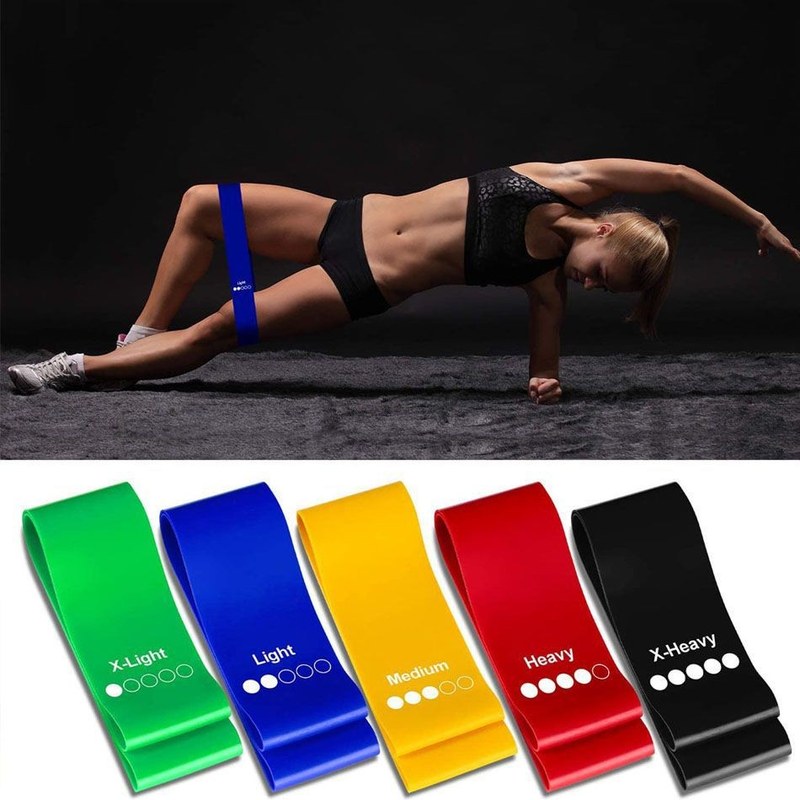
| Resistance level | Typical Shore A | Relative oil load | Oil-bleed risk if under-formulated |
|---|---|---|---|
| Extra light / light | 25–35 | Highest | Highest: test this level first |
| Medium | 35–45 | High | Moderate |
| Heavy | 45–55 | Lower | Low |
| Extra heavy | 55–65 | Lowest | Lowest |
The Shore A ranges match our TPE-S material guide. The risk column is a ranking, not a measured value: it describes where bleed appears first when a compound is marginal. The practical rule for sample approval is simple. A supplier's heavy band tells you almost nothing about oil bleed. Their extra-light band tells you almost everything.
The 5-Minute Diagnosis: Which Kind of Sticky Is It?
You need a sheet of cigarette paper (or plain, unprinted tissue), mild dish soap and a light source.
- Blot. Press the paper firmly against the tacky area for 60 seconds. Hold it up to the light. A translucent grease spot means free oil.
- Wipe. Rub a cloudy film with a dry cloth. If it comes off and the surface is smooth, it is bloom, not degradation.
- Wash and wait. Wash with mild soapy water, rinse, air dry, and check again after 24 hours and after 7 days.
- Stretch. Stretch the band to twice its length under good light. Look for whitening, random fine cracks, or a band that does not return to its original length.
- Check the history. Was it in a hot vehicle, near a heater, in sunlight, or handled with sunscreen or lotion?
| What you see | Most likely cause | Action |
|---|---|---|
| Grease spot on paper; band firm; film returns days after washing | TPE oil bleed (formulation) | Wash and use; raise with supplier, quarantine the lot |
| Grease spot once; no return after washing | External oil: lotion, sunscreen, hand cream | Wash; change handling habits |
| Gummy, soft, smears; stays tacky after washing | Latex oxidation (chain scission) | Retire the band |
| Dry cloudy film that wipes off | Wax or antiozonant bloom on latex | Cosmetic; wipe and use |
| Silvery film that will not rub off; fine cracks | Oxygen or ozone surface degradation | Retire the band |
| Bands fused together inside a sealed bag | Blocking: heat plus pressure in storage | Separate carefully; inspect as above; review storage |
Why Powder Is the Wrong Fix, Especially in Clinics
The most common advice online is to dust sticky bands with baby powder or cornstarch. On a TPE band with oil bleed, powder mixes with the oil into a paste and hides the evidence you need to hold a supplier accountable. On latex, it only masks a band that should be retired.
In clinics, schools and gyms there is a bigger reason. On December 19, 2016, the US FDA finalized a ban on powdered surgeon's gloves, powdered patient examination gloves and absorbable glove powder, effective January 18, 2017. Among the risks it cited was sensitization of healthcare workers and patients to natural rubber latex allergens, and the ban explicitly covered cornstarch powder. Powder carries latex proteins into the air. Powdering latex bands in a shared therapy room recreates the exposure route the FDA removed from gloves. If latex allergy is a concern in your setting, the fix is a latex-free material, not powder. Our latex allergy and exercise equipment guide covers the details.
How to Test for Oil Bleed Before You Place a Bulk Order
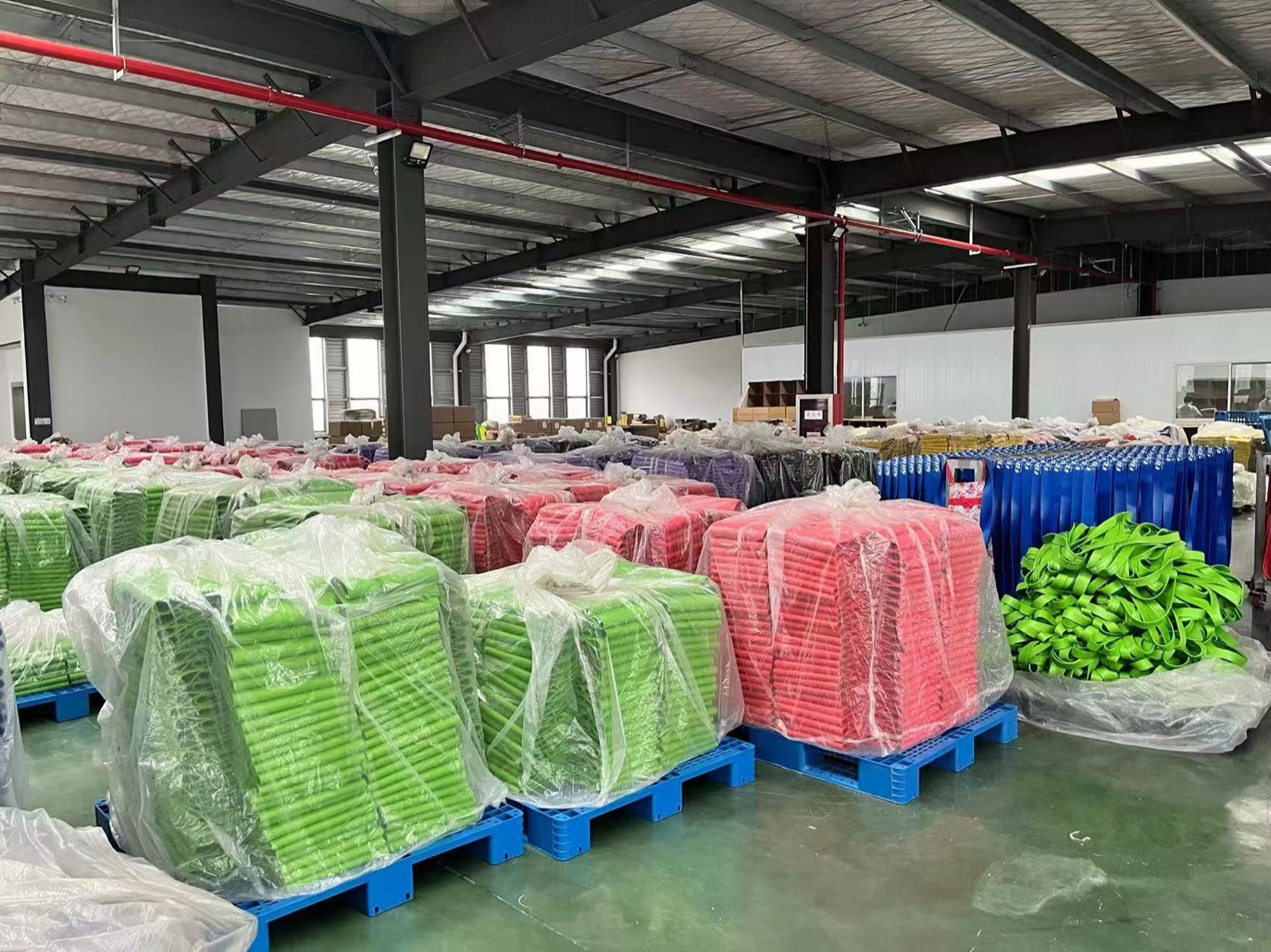
No ASTM or ISO standard is written specifically for oil bleed in exercise bands. The elastomer industry does use a well-established blotter approach, though, and it adapts easily to band samples.
The method described in US patent 9,593,237 ages oil-extended compound plaques on ZigZag cigarette paper for 24 hours, 1 week and 3 weeks, at both 23 °C and 70 °C. The paper is then scanned against a black background and scored as a Normalized Oil-bleed Index (NOBI) from 0 (clean) to 100 (saturated). The compositions it claims target a NOBI below 50 after 70 °C ageing and below 20 after 3 weeks at 23 °C. Those limits belong to that patent's olefin block copolymer compounds, not to resistance bands. What is worth borrowing is the method: two temperatures, several durations, and a paper you can compare.
A practical buyer's version
- Request samples of every resistance level, not one representative band. Label them.
- Cut 50 mm strips from the lightest and the heaviest level. Sandwich each between two cigarette papers under a flat glass plate.
- Put one set in a bench oven at 70 °C for 24 hours (a stand-in for a summer container or car boot). Leave an identical set at room temperature for 7 days.
- Photograph each paper against a black background next to an unused control sheet. Compare the translucent area.
- Keep the papers and photos with the approved golden sample, so the bulk shipment can be checked against the same reference.
A clean heavy band and a stained light band is the classic signature of a compound that is marginal at the soft end. Fold this test into your wider sample testing and approval process, and add a surface check to your pre-shipment inspection checklist.
What to Put in Your Spec and Purchase Order
Stickiness disputes are hard to settle when nothing was agreed up front. These are the lines worth asking for. Any reputable TPE supplier should be comfortable discussing them.
| Spec item | Suggested wording | Why it matters |
|---|---|---|
| Oil bleed | "No visible oil transfer to blotter paper after 24 h at 70 °C, all resistance levels, compared with the approved sample papers" | Turns "feels greasy" into a pass/fail check |
| Levels covered | "Approval applies per resistance level; the lightest level must be submitted" | The light band is where bleed shows first |
| Surface finish | "No anti-tack powder or surface lubricant applied" | Powder can hide bleed at inspection |
| Compound consistency | "Formulation and SEBS grade not changed after approval without written notice" | A cheaper grade swap is the usual cause of a sticky second order |
| Material declaration | "Latex-free TPE; RoHS and phthalate test reports supplied per lot" | Confirms material and plasticizer type |
| Storage and transit | "Shelf-life statement assumes storage below 25 °C, away from direct light" | Defines responsibility if goods sit in heat |
Compounding in-house matters here. When a factory buys ready-made pellets, it cannot change the oil ratio or the SEBS grade at the soft end of the range; it can only buy a different pellet. Factories that compound their own material can adjust Shore A in small steps without simply adding oil. If you are building a private-label range, ask each shortlisted factory where its pellets come from. See our custom OEM resistance bands page for how we handle per-level approval.
Care Instructions Worth Printing on the Insert
A lot of "sticky band" returns come from use, not manufacturing. A short care card cuts them down and costs nothing:
- Clean: wipe with a cloth dampened with water and a little mild soap; rinse; air dry flat, out of direct sun.
- Avoid: alcohol, solvents, bleach, oils, silicone sprays, and contact with sunscreen, massage oil or hand lotion. Mineral oil and petroleum jelly are hydrocarbons that soften both latex and SEBS-based TPE.
- Store: below 25 °C, in the dark, loosely coiled rather than tightly folded, and never in a car boot or near a heater.
- Retire: any band with cracks, whitening at stretch points, permanent stretch, or tackiness that returns after washing.
If you sell sets, the packaging guide covers insert and bag options, and the TPE vs latex comparison helps you decide which material fits your channel.
Where This Guide Stops Being Precise
- There is no band-specific oil bleed standard. The blotter method is borrowed from general elastomer practice, and the NOBI limits quoted come from one patent's compounds, not from resistance bands.
- The risk ranking by resistance level is engineering reasoning, based on oil content driving softness. It is not a measured bleed rate for any specific product.
- The 0.7–2× oil-to-SEBS range is compounding guidance from a trade source. Real limits depend on the SEBS grade, the oil viscosity and the other ingredients.
- "Latex" is not one material. Antioxidant packages and raw-material quality vary widely, so ageing speed varies widely too.
- Seventy degrees for 24 hours is a screening condition, not a prediction of how many months a band will stay dry in a particular warehouse.
Frequently Asked Questions
Why are my resistance bands sticky?
It depends on the material. Latex bands turn sticky when the polyisoprene oxidizes: heat, UV and trace metals break the chains, and natural rubber softens and turns tacky rather than hardening. That damage is permanent. TPE bands turn sticky through oil bleed, when the softening oil migrates to the surface, usually after heat. The polymer is intact, but a compound that bleeds will keep doing it.
Is a sticky resistance band still safe to use?
Retire a sticky latex band, because tackiness means chain scission and a weaker band. A TPE band with a light oily film is not structurally degraded and can be washed and used. If the film returns within days, or you also see cracks, whitening or permanent stretch, stop using it and contact the supplier.
How do I tell if a band is degrading or bleeding oil?
Blot it with cigarette paper and hold the paper to the light: a translucent spot means free oil. Wash with mild soap and wait 24 hours. Oil bleed returns as a slick film on a firm band. Oxidized latex stays gummy, may smear colour, and often shows random fine cracks. A cloudy film that wipes off is bloom; one that will not rub off is surface degradation.
Should I put baby powder or cornstarch on sticky resistance bands?
No. Powder hides the symptom and, on TPE, mixes with oil into a paste. On latex in shared settings it is a real concern: the FDA's powdered glove ban, final in December 2016 and effective January 18, 2017, covered cornstarch powder and cited sensitization to latex allergens. Wash instead, and replace bands that stay tacky.
Why does the lightest band in my set get sticky first?
Because it carries the most oil. In SEBS-based TPE, hardness falls as the oil-to-SEBS ratio rises, and higher oil content increases surface stickiness. Extra-light bands sit around Shore A 25–35 and extra-heavy around 55–65, so the light band has the least margin. Always test the lightest level when approving samples.
How can a buyer test resistance bands for oil bleed before ordering?
Use a blotter test. One published industry method ages compound samples on cigarette paper for 24 hours, 1 week and 3 weeks at 23 °C and 70 °C. For bands, sandwich strips of the lightest and heaviest levels between cigarette papers, age one set at 70 °C for 24 hours and one at room temperature for 7 days, and compare against a control sheet. Agree the acceptance limit in writing before bulk production.
Can sunscreen or hand lotion make resistance bands sticky?
Yes, on both materials. Mineral oil, petroleum jelly and many sunscreen and massage-oil ingredients are hydrocarbons. Natural rubber swells in them, and the rubbery mid-block of SEBS is compatible with paraffinic oil, which is why that oil softens it in the first place. Wash hands before use and wipe bands with mild soapy water afterwards.
How should resistance bands be cleaned and stored to prevent stickiness?
Wipe with mild soapy water, rinse, and air dry out of direct sun. No alcohol, solvents, bleach, oils or silicone sprays. Store below 25 °C, in the dark, loosely coiled, and never in a hot car. Heat accelerates both latex oxidation and TPE oil bleed, so cool, dark storage prevents more stickiness than any later treatment.
Related Guides
- Why do resistance bands snap? Service life and warning signs
- Resistance band shelf life and storing bulk stock under ISO 2230
- What are resistance bands made of?
- TPE vs latex resistance bands
- How to test and approve resistance band samples
- Resistance band color code chart
Talk to the Factory
TAICLET is a TPE-only manufacturer in Danyang, Jiangsu: six extrusion lines, in-house compounding, 30 million+ bands a year, and no natural rubber latex in any product. If sticky bands are showing up in your returns, send us the resistance level and a photo. We will send matching samples of every level so you can run the blotter test yourself before you switch.
Browse TPE mini loop bands, pull-up assist bands and chair exercise straps, or send us your requirements. OEM from 200 sets, wholesale from 1,000 sets, FOB Ningbo.
Want to run the oil-bleed test on our bands? We ship a full set of resistance levels, lightest included. Stock-colour samples in 3–5 days. Request samples →