
Resistance Band Shelf Life: How Long Bulk Stock Really Lasts in a Warehouse
Published 2026-09-16 · 12 min read · Sourcing Guide
Quick answer: resistance bands have no regulated expiry date. Stored correctly — below 25 °C, under 70% RH, dark, and not folded under compression — natural rubber latex holds its rated force for about 3–5 years and TPE for 5+ years. Stored badly, latex can craze along the fold line inside a sealed bag in under 12 months. The variable that decides the outcome is your warehouse and your packing instruction, not the polymer.
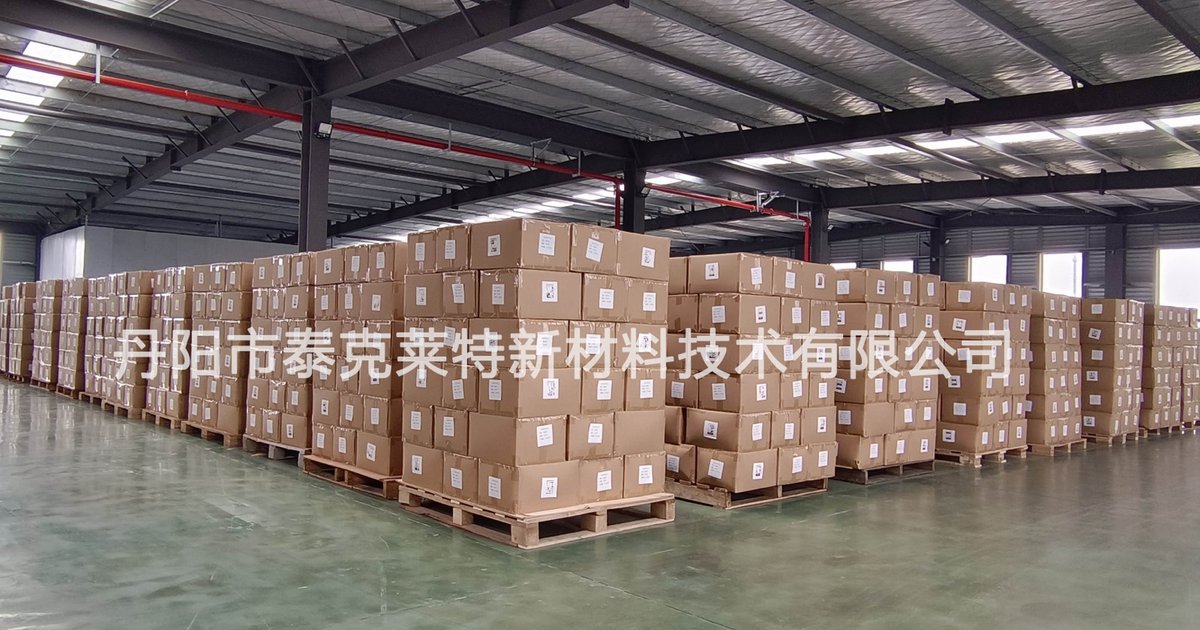
We extrude TPE resistance bands in Danyang, Jiangsu, on six lines producing 30 million+ bands a year, and a large share of that output sits in a customer's warehouse for six to eighteen months before it reaches an end user. So we get the aged-stock complaints, the photos of crazed bands still in their original polybag, and the awkward conversation about whose fault it was.
Almost every published article on this topic is written for someone with three bands in a gym bag. This one is written for the person holding 20,000 units on a pallet. It covers what actually ages a band that is never used, what the storage standard says, what your factory's test report does and does not prove, and the exact wording to put in your purchase order.
The Two Clocks: Service Life vs Shelf Life
Suppliers routinely answer a shelf-life question with a service-life number, and buyers routinely accept it. They are different clocks measuring different failure modes.
| Service life | Shelf life | |
|---|---|---|
| Clock starts | First use by the end user | Date of manufacture at the factory |
| Dominant failure | Mechanical fatigue, nicks, abrasion | Ozone and thermal-oxidative ageing, blocking |
| Driven by | Cycles and handling | Temperature, ozone, UV, packing strain |
| Who controls it | The end user | You, the importer |
| Typical claim | "10,000+ cycles" | Usually not stated at all |
Our own durability figure — 10,000+ stretch cycles at 3× elongation on an in-house fatigue tester — is a service-life number. It tells a gym owner something useful and tells a warehouse manager nothing. If you want the service-life side of the story, we cover it separately in why resistance bands snap. This guide is strictly about the other clock: the one that runs while the goods sit still.
What Actually Ages a Band That Is Never Used
Four mechanisms matter, and only one of them is time.
| Mechanism | What it does | Latex | TPE (SEBS) |
|---|---|---|---|
| Ozone attack | Splits C=C bonds in the backbone; fine surface crazing at strained points | Vulnerable | Essentially immune |
| Thermal-oxidative ageing | Chain scission and further crosslinking; hardening, force drift | Moderate | Low |
| Blocking | Bands fuse to each other in the bag under heat and stacking pressure | High — needs dusting | Low — no talc needed |
| Antiozonant bloom | Protective additives migrate to the surface as a grey-brown film | Common, cosmetic | Not applicable |
The chemistry behind the first row is the whole reason these two materials behave differently in storage. Natural rubber latex is polyisoprene, and every repeat unit in its backbone carries a carbon–carbon double bond. Ozone reacts with those bonds directly. TPE grades based on SEBS — styrene-ethylene-butylene-styrene — have a hydrogenated, saturated mid-block: the double bonds were removed during polymerisation, so ozone has nothing to react with. That single structural difference, not manufacturing care, is why one material ages on a shelf and the other largely does not. The full comparison is in our TPE vs latex resistance bands guide.
Note what is not on that list: simply elapsed time. A saturated elastomer sitting in a cool, dark, unstrained state is remarkably stable. Stock does not rot on a schedule. It degrades when one of the four mechanisms above is given the conditions it needs.
The Fold Line: Why Cracks Start Where You Packed the Band
This is the part almost nobody outside a rubber lab knows, and it is the single highest-value paragraph in this guide.
Ozone cracking requires strain. Ozone attacks unsaturated rubber, but cracks only initiate where the surface is held above a threshold strain. Below that threshold, an unsaturated rubber can sit in ozone and stay visually intact; above it, cracks nucleate and grow perpendicular to the strain direction. The published rubber literature treats this threshold strain as a measurable material property, and it is why ozone test specimens are always mounted under a defined elongation rather than tested relaxed.
Now look at how resistance bands are usually packed: folded flat two or three times, compressed into a polybag, sometimes bundled with a tight rubber band, then stacked under the weight of the cartons above. Every one of those steps imposes sustained local strain — and the fold crease is the sharpest of them.
That is why aged-stock complaints almost always arrive with the same photograph: fine parallel crazing running along a single line across the band, while the rest of the surface looks new. The band was not damaged in shipping. It cracked where you folded it, months before anyone opened the bag.
ISO 2230 states the principle in one sentence: rubber should be stored free from superimposed tensions and compressive stresses or other causes of deformation. In practical packing terms:
- Roll, do not fold. A loose coil distributes curvature; a crease concentrates it.
- No tight bundling. A rubber band cinched around a coil creates exactly the strained line you are trying to avoid.
- Cap the quantity per polybag. Overfilled bags compress the bands at the bottom of the stack.
- Opaque bags, not clear. Clear bags under warehouse lighting add a UV dose for free.
- Limit stack height. Compression at the bottom of a 2.5 m pallet stack is not trivial.
None of this costs more than a few cents per unit, and it is a packing instruction you can hand to any factory. We cover set configuration and bag specification in more depth in our resistance band sets and packaging guide.
Holding stock for more than a year? Our bands are 100% TPE (SEBS-based) with zero natural rubber latex, so ozone crazing in storage is not a failure mode. Ask for a sample pack and our packing spec — OEM from 200 sets, wholesale from 1,000 sets, FOB Ningbo.
ISO 2230:2026 — The Storage Standard Your Spec Sheet Probably Predates
There is no exercise-band-specific shelf-life standard anywhere. What there is, and what almost no supplier in this category cites, is ISO 2230, Rubber products — Guidelines for storage. It covers inspection, recording, packaging and storage of products made from vulcanised or thermoplastic rubber before they enter circulation.
Timing note worth checking before you quote it: ISO 2230 was revised to Edition 3 and published in March 2026, superseding ISO 2230:2002, which was withdrawn on 9 March 2026. If your supplier's technical file references the 2002 edition — and most still do — it is citing a withdrawn document. Verify the current edition at iso.org/standard/89162.html before writing it into a contract.
The storage conditions the standard is built around:
| Parameter | Requirement | Why it bites in practice |
|---|---|---|
| Temperature | Below 25 °C, preferably below 15 °C; away from direct heat sources | An uninsulated metal-roof warehouse hits 40–50 °C in summer |
| Humidity | Below 70% RH | Coastal 3PL space frequently runs higher |
| Light | Protected from sunlight, strong artificial light and high-UV lighting | Skylights and old fluorescent fixtures |
| Ozone | No ozone-generating equipment in the storage room | Forklift chargers, motors, UV lamps, air purifiers |
| Deformation | Free from superimposed tension and compressive stress | Folding and tight bundling, as above |
The ozone row is the one that catches real warehouses. Battery-charging bays for electric forklifts, large electric motors and UV-emitting fixtures all generate ozone locally, and the concentration next to that equipment bears no relation to the outdoor ambient figure. If you store latex bands, keep the pallets away from the charging bay. It is a free control.
ISO 2230 also assigns elastomers to storage groups with an initial storage period and an extension period granted after inspection:
| Group | Example polymers | Initial | Extension |
|---|---|---|---|
| A | Natural rubber (NR), SBR, BR, polyurethane | 5 years | +2 years |
| B | Nitrile (NBR), neoprene (CR), butyl (IIR), HNBR | 7 years | +3 years |
| C | EPDM, silicone, fluorocarbon (FKM) | 10 years | +5 years |
Natural rubber sits in the shortest group. For blends, the shorter constituent period governs. Two honest caveats before you lift these numbers into a spec: the group values above are the widely published classification and you should confirm them against the 2026 edition text; and SEBS-based TPE is not assigned to one of these classical groups at all. Its saturated backbone puts it functionally alongside the ozone-resistant families, but "functionally alongside" is an engineering judgement, not a standard citation, and we will not pretend otherwise.
What "Passes ASTM D1149" Actually Proves
If you ask a Chinese factory for ozone data, you will usually get an ASTM D1149 report (or its ISO equivalent, ISO 1431-1). It is a real test and worth having. It is also routinely over-read.
D1149 mounts strained specimens in a chamber with a controlled ozone atmosphere and reports whether surface cracks appear. Common conditions are 50 pphm at 40 °C for 24–168 hours. Put that next to the ambient reference point: the US EPA's National Ambient Air Quality Standard for ozone is 0.070 ppm — that is 7 pphm — as a fourth-highest daily maximum 8-hour concentration averaged over three years. The test therefore runs at roughly seven times the US regulatory outdoor ceiling, at elevated temperature, with the specimen deliberately held under strain.
What that buys you: confidence that the compound contains a working antiozonant package and will not craze in weeks. What it does not buy you: a months-on-a-shelf number. There is no validated conversion from a 72-hour accelerated exposure to real storage life, and any supplier who offers you one is extrapolating. The companion heat-ageing test, ASTM D573 (air-oven ageing, typically 70 °C for 168 hours, reporting retained tensile and elongation per ASTM D412), has the same limitation.
The useful way to use these reports is comparative, not predictive: run the same protocol on two candidate suppliers' material and buy the one that retains more. Fold that into your AQL inspection and material qualification plan as a once-per-compound test, not a per-shipment one.
Realistic Shelf Life by Material and Warehouse Grade
These are the working figures we give wholesale customers. They assume unopened original packing, bands not folded under compression, and no direct light.
| Storage condition | Natural rubber latex | TPE (SEBS) | First failure you will see |
|---|---|---|---|
| Climate-controlled <25 °C, <70% RH, dark | 3–5 years | 5+ years | Gradual force drift |
| Ambient, insulated peaks ~30 °C | 2–3 years | 4–5 years | Bloom on latex surface |
| Uninsulated metal roof peaks 40–50 °C | 12–18 months | 2–3 years | Blocking — bands fused in bag |
| Near forklift charging bay local ozone source | 6–12 months | Largely unaffected | Crazing at fold line |
| Clear bags under skylights | 6–12 months | 2–3 years | Discolouration, then embrittlement |
Read the bottom three rows carefully. The difference between the best and worst case for latex is roughly a factor of five, and none of it is about who made the band. Latex stock in a hot warehouse next to a charging bay in clear bags will disappoint you regardless of the supplier's test report.
Date Coding and FIFO: Three Lines for Your Purchase Order
Shelf life is unmanageable without a date. Most resistance band cartons arrive with a shipment date at best, which makes genuine FIFO impossible once you have three shipments in the same aisle. Add these three clauses:
1. Date of manufacture marking
"Each inner carton and master carton shall be marked with the date of manufacture in ISO 8601 format (YYYY-MM), distinct from the shipment date, in a position visible without opening the carton."
2. Packing instruction
"Bands to be rolled or laid flat without creasing. No folding, no elastic or tape bundling under tension. Opaque polybag, maximum [N] pieces per bag. Master carton stack height not to exceed [N] cartons."
3. Storage and shelf-life clause
"Stated shelf life applies to goods stored below 25 °C and below 70% relative humidity, protected from direct sunlight and high-UV lighting, and away from ozone-generating equipment, in accordance with ISO 2230 (current edition)."
The third clause is the one people skip, and it is the one that matters when there is a dispute. Without it, "the bands went bad in storage" has no agreed reference condition and the argument becomes unresolvable. With it, both sides know what was promised and under what assumptions. Our full contract-stage checklist sits in the wholesale resistance bands ordering guide.
How Many Months of Inventory Should You Actually Buy?
The right order quantity is set by replenishment lead time, not by shelf life. Shelf life only tells you the ceiling you must not hit.
Build the cycle from real numbers. Ours, as a worked example:
| Stage | Stock colour | Custom colour |
|---|---|---|
| Production | 7–15 days | 15–25 days |
| Booking + inland to Ningbo | 5–10 days | 5–10 days |
| Ocean transit (US West Coast) | 16–22 days | 16–22 days |
| Ocean transit (N. Europe) | 30–40 days | 30–40 days |
| Port, customs, inland | 7–14 days | 7–14 days |
| Door-to-door total | ~40–60 days (USWC) | ~60–90 days (EU, custom) |
Transit figures are typical rather than contractual — confirm with your forwarder for the specific service, and note that peak season and the Chinese New Year shutdown both distort them. Against a 60–90 day replenishment cycle, 4–6 months of cover is comfortable: enough safety stock to survive a delayed sailing, nowhere near any shelf-life ceiling.
The temptation runs the other way. A bigger order unlocks a lower unit price, and 18 months of cover looks cheap on a per-piece basis. Before committing, price the other side of it: warehousing for the extra twelve months, working capital tied up, the risk that a colourway is discontinued, and — for latex stock in an ambient warehouse — genuine ageing risk. Run that against the landed-cost model in our importing resistance bands from China guide. In most cases the per-piece saving is smaller than the carrying cost.
One structural point in the buyer's favour: a low MOQ removes the pressure to overbuy. Our OEM minimum is 200 sets with custom logo on standard colours and 1,000 sets for unbranded wholesale, which lets a brand reorder on a 4-month cycle rather than committing to a year of stock to clear a minimum.
Receiving and Re-Inspection: The 10-Minute Check on Aged Stock
Whether you are receiving a container or auditing stock that has been sitting since last year, the same four checks apply. Pull cartons from the oldest date code, not a convenient one, and sample across pallet positions — the bottom of the stack and the row nearest the wall behave differently from the middle.
- Raking-light crack check. Hold the band so light rakes across the surface at a shallow angle and look along the fold or coil line. Fine parallel crazing perpendicular to the strain direction is ozone cracking. It is invisible under flat overhead light, which is why it gets missed at receiving.
- Permanent set test. Stretch to 2× resting length, hold 30 seconds, release, wait 60 seconds, measure. Return to within 10% of original length is acceptable. Beyond 10% permanent set, the band no longer delivers its labelled force and should not ship.
- Surface condition. Tackiness indicates surface degradation and the band should be retired. A dry powdery or grey-brown film on latex is usually antiozonant bloom — cosmetic, and it means the protective package is doing its job, but it will generate customer complaints, so decide before it reaches retail.
- Force verification. Measure force at a fixed elongation with a digital luggage scale and compare against the original spec sheet. Our method is in how to measure resistance band weight. Always measure at a stated elongation — a force number without an elongation figure is meaningless.
Log the result against the date code. Two or three cycles of this and you will know empirically how your specific warehouse treats your specific product, which is worth more than any general table including the ones above.
Where These Numbers Stop Being Precise
Every table in this guide is an engineering estimate, and it is more useful to you if we say where the estimates weaken:
- The shelf-life ranges are field data, not certified test results. They come from our own storage trials and from customer replacement patterns. They are not traceable to an accredited laboratory, because no accredited real-time storage study exists for this product category.
- Warehouse "grades" are a simplification. Real warehouses have a hot mezzanine and a cool north wall. Temperature is the dominant driver and it is not uniform across your floor.
- Accelerated tests do not linearly convert to years. Ageing kinetics are temperature-dependent in a way that resists simple extrapolation, and the strain state in a chamber does not replicate the strain state in a polybag.
- TPE is not covered by the ISO 2230 group table. As noted, we are reasoning from backbone saturation, not citing a listed value.
- "Latex" is not one material. Compound quality, antiozonant loading and cure state vary enormously between suppliers. Treat the latex column as a range across the category, not a property of any particular band.
If a supplier gives you shelf-life figures with no caveats at all, that is a signal about the supplier rather than about the product.
Frequently Asked Questions
Do resistance bands expire?
There is no regulated expiry date for exercise bands, and no ASTM or ISO standard assigns them a legal shelf life. Any hard expiry date on a carton is a supplier policy, not a test result. What does exist is ISO 2230, revised to Edition 3 in March 2026, which places natural rubber in the shortest storage group: 5 years initial storage life from date of manufacture plus a 2-year extension after inspection, provided the storage conditions are met. Those conditions are where real warehouses fail, not the polymer.
How long can I store resistance bands in a warehouse before they degrade?
Climate-controlled (below 25 °C, under 70% RH, dark, away from ozone sources): about 3–5 years for latex and 5+ years for TPE. In an uninsulated warehouse reaching 40–50 °C under a metal roof, cut latex to 12–18 months and expect blocking. TPE is far less heat-sensitive because its backbone is saturated. For most importers the limiting factor is the building, not the material.
Why do resistance bands crack along the fold line?
Because ozone cracking needs strain to initiate. A band folded flat and compressed in a polybag is held under sustained local strain exactly at the crease, so that is where crazing starts — often while still sealed and unsold. ISO 2230 puts it plainly: rubber should be stored free from superimposed tensions and compressive stresses. Rolling instead of folding, and not bundling tight, removes the initiation site.
What does it mean if my supplier says the bands pass ASTM D1149?
Less than it sounds. D1149 is an accelerated screening test, commonly 50 pphm ozone at 40 °C for 24–168 hours on strained specimens. The US EPA ambient ozone standard is 0.070 ppm, i.e. 7 pphm, so the test runs at roughly seven times the regulatory outdoor ceiling. Passing means the antiozonant package works. It does not convert into months on a shelf, and no laboratory will make that conversion for you.
What storage conditions should I write into my purchase order?
Three lines: (1) date of manufacture marked on every carton in ISO 8601 form, separate from the shipment date; (2) a packing instruction specifying rolled or flat, uncreased, no tension bundling, opaque bags with a capped quantity; (3) a storage clause stating that the quoted shelf life assumes storage below 25 °C and 70% RH, away from light and ozone-generating equipment, per ISO 2230 current edition. The third line is what makes an aged-stock dispute resolvable.
How many months of resistance band inventory should I order at once?
Work backwards from replenishment lead time. With production at 7–15 days for stock colours and 15–25 days for custom, plus ocean transit of roughly 16–22 days to the US West Coast or 30–40 days to Northern Europe, plus port and inland handling, a realistic door-to-door cycle is 60–90 days. Holding 4–6 months of cover gives safety stock without approaching any shelf-life limit. Buying 18 months of cover to unlock a lower unit price is usually a false economy once carrying cost is priced in.
Does TPE have a longer shelf life than latex?
Yes, and for a structural reason rather than a quality one. Natural rubber latex is polyisoprene with carbon–carbon double bonds in its backbone, which is precisely what ozone attacks. SEBS-based TPE has a hydrogenated, saturated mid-block with no such bonds, so ozone has nothing to react with. TPE also contains none of the natural rubber proteins associated with Type I latex allergy, and does not need talc or cornstarch dusting to stop blocking in the bag. For anyone holding stock beyond a year, this is the biggest single variable.
How do I check whether aged stock is still sellable?
Four checks on cartons pulled from the oldest date code: raking-light inspection along the fold or coil line for fine parallel crazing; a permanent-set test (stretch to 2×, hold 30 s, release, must return within 10% of original length); a surface check for tackiness or bloom; and a force measurement at a fixed elongation compared against the original spec. Beyond 10% permanent set, the band no longer matches its label.
Related Guides
- Why do resistance bands snap? — the service-life side of the story
- TPE vs latex resistance bands — 11 measured differences
- Resistance band quality control: AQL inspection checklist
- Resistance band sets and packaging guide
- Importing resistance bands from China: landed cost
- Wholesale resistance bands: bulk ordering and pricing
Talk to the Factory
TAICLET is a TPE-only manufacturer in Danyang, Jiangsu — six extrusion lines, 30 million+ bands a year, zero natural rubber latex in any product. If you are planning an order that will sit in a warehouse for more than a few months, we will send you our packing specification and a sample pack so you can run your own storage trial before committing.
Browse mini loop bands and pull-up assist bands, or send us your requirements. OEM from 200 sets, wholesale from 1,000 sets, FOB Ningbo.
Planning bulk inventory? Tell us your target quantity and how long it will sit in storage, and we will quote with a packing spec built for it. Request a quote → Samples in 3–5 days on stock colours.