
How to Clean and Disinfect Resistance Bands Without Ruining Them: TPE vs Latex vs Fabric
Published 2026-10-12 · Last Updated: 2026-10-12 · 11 min read · Care & Maintenance
Quick answer: for everyday cleaning, wash resistance bands in lukewarm water with a drop of mild dish soap, rinse, and air dry flat away from sunlight. For disinfection, which matters in clinics, gyms and classrooms, use a quaternary ammonium or hydrogen peroxide product. Leave it wet for the label contact time, then wipe the residue off with water. Avoid bleach on latex, citrus or solvent cleaners on TPE, and dryers or dishwashers on everything. The right method depends on what the band is made of, and most care guides skip that.
Key takeaways
- Material decides the method. Latex is vulnerable to oxidisers (bleach, ozone, UV). TPE is vulnerable to oils and hydrocarbon solvents. Fabric bands are vulnerable to heat.
- The "natural" citrus cleaner is the worst choice for TPE. d-Limonene is a hydrocarbon solvent that attacks the polystyrene blocks that hold an SEBS band together.
- Alcohol is a CDC-documented rubber hardener after repeated use. Keep it for occasional spot disinfection, not daily wiping.
- Shared clinic bands are noncritical items: low-level disinfection, with an EPA-registered product, for the label's full wet contact time.
- Residue is the hidden failure. Quat films make bands tacky and slippery in the hand. Rinse after the contact time.
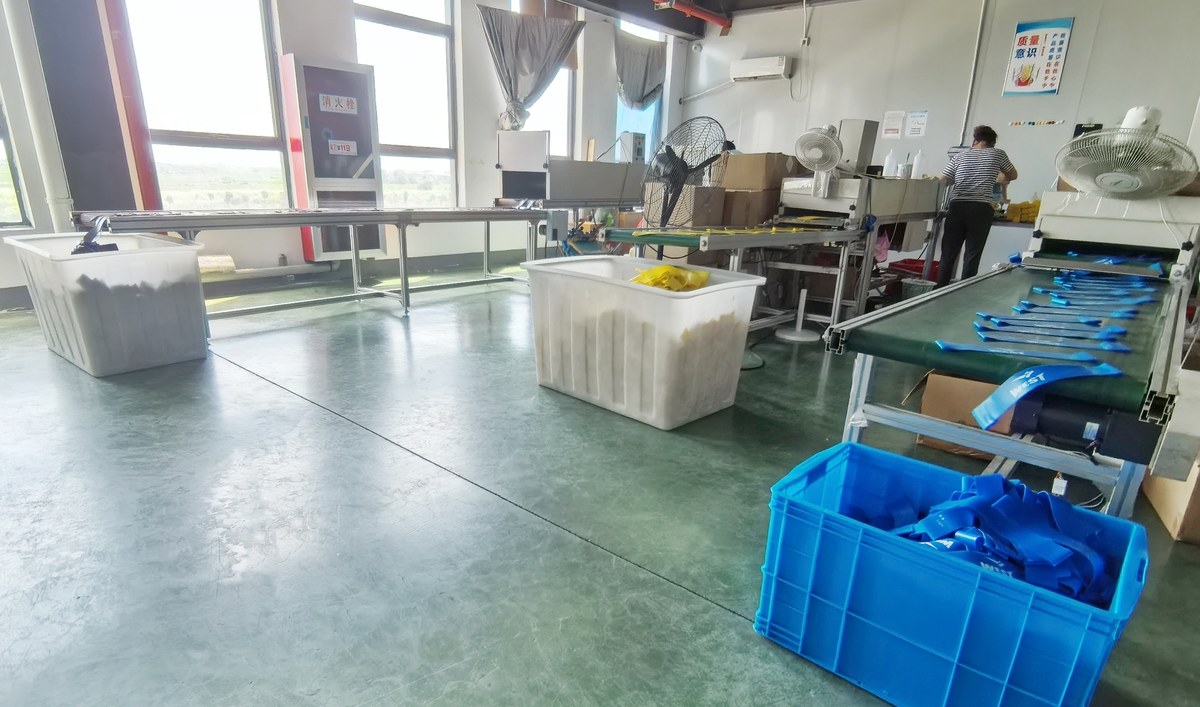
We extrude TPE resistance bands in Danyang, Jiangsu: 6 lines, 30 million+ bands a year, from our own compounded pellets. A surprising share of the complaints that reach us as "quality issues" turn out to be cleaning issues. A gym wipes its pull-up bands with a citrus degreaser for three months. A clinic soaks latex therapy bands in bleach. A school sends chair bands through the dishwasher. This guide is the care sheet we wish came in every box, written by material, because one rule does not fit all three band types.
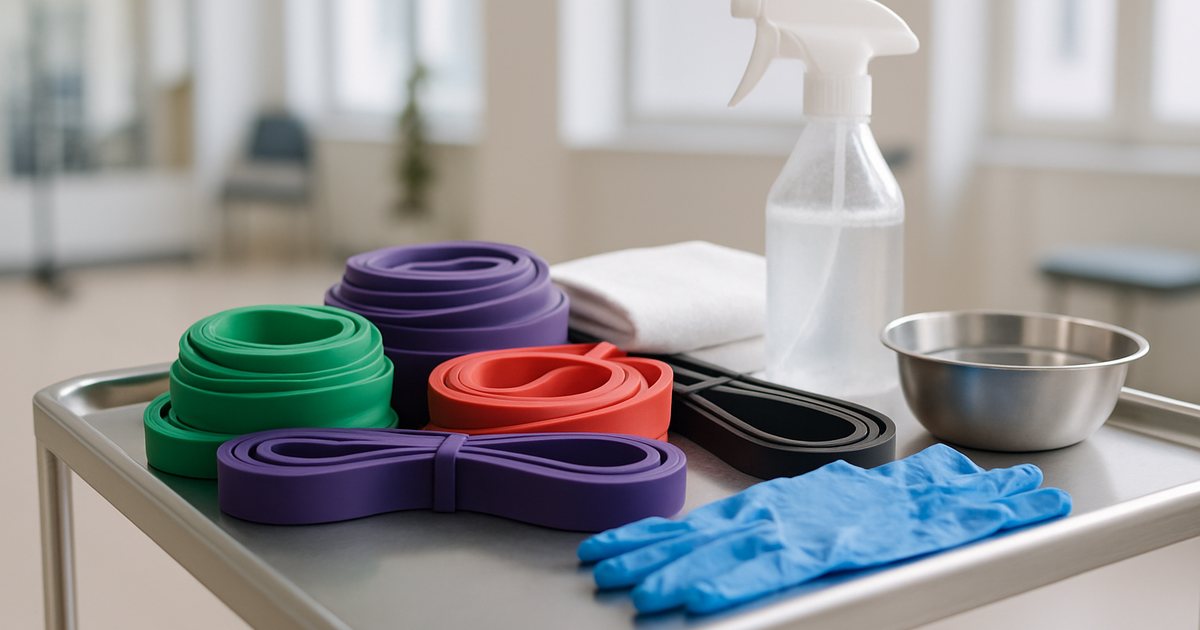
First, Identify What Your Band Is Made Of
Every cleaning decision below depends on this. Three materials cover nearly every band on the market:
- Natural rubber latex: the classic dipped therapy band and layered loop band. It has a matte, slightly powdery surface (often talc or starch) and a faint ammonia smell when new. The polymer is polyisoprene, which has a carbon-carbon double bond in every repeat unit of its backbone. Those double bonds are where oxygen, ozone, UV and chlorine attack.
- TPE (usually SEBS-based): a smooth, slightly silky surface with no powder, labelled latex-free. SEBS is a block copolymer: hard polystyrene end-blocks lock together to act like the crosslinks in rubber, and a saturated rubbery mid-block gives the stretch. Saturated means no backbone double bonds, so TPE shrugs off oxidisers far better than latex. The weak point is elsewhere: TPE compounds contain processing oil, and hydrocarbon solvents attack the polystyrene blocks. Read more in our TPE vs latex resistance bands comparison.
- Fabric (woven): polyester/cotton knit with latex threads woven inside, typical of hip circles and booty bands. Because the elastic is inside, the textile shell protects it from chemicals, but the threads are exposed to heat.
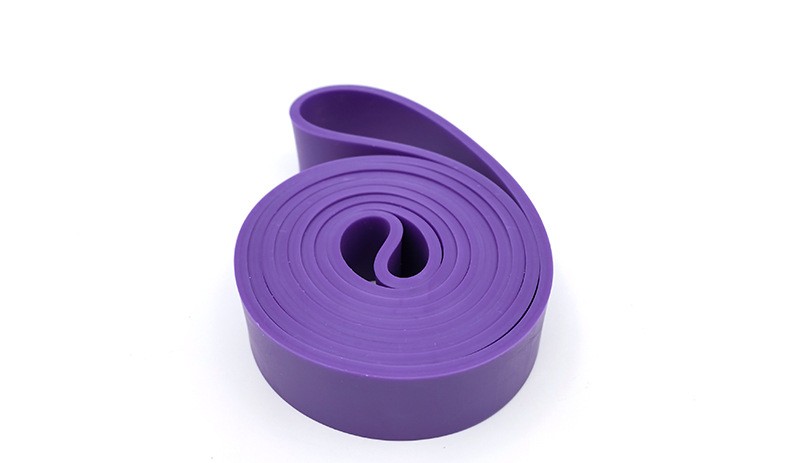
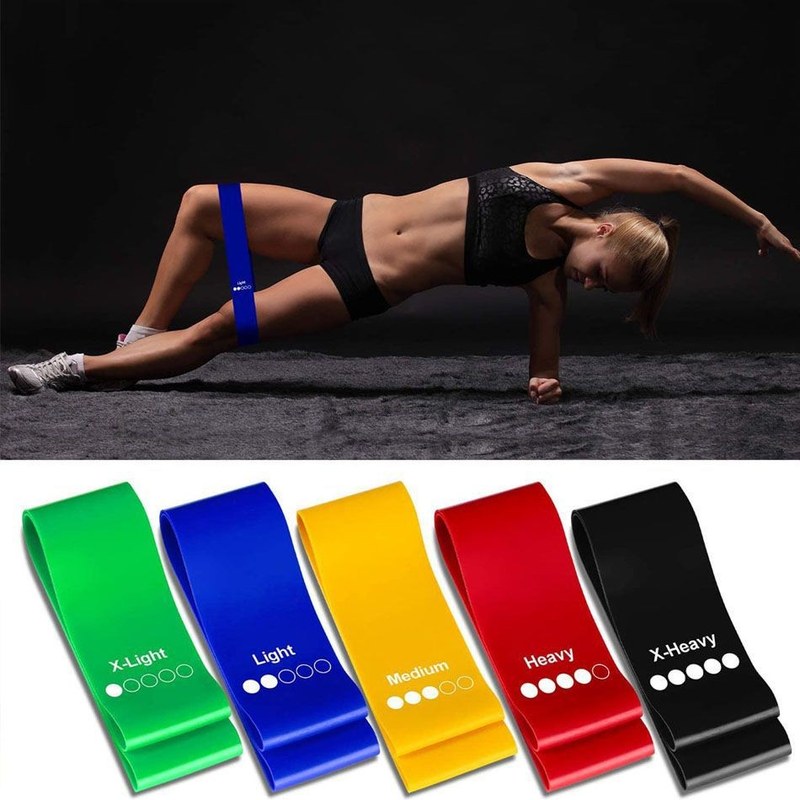
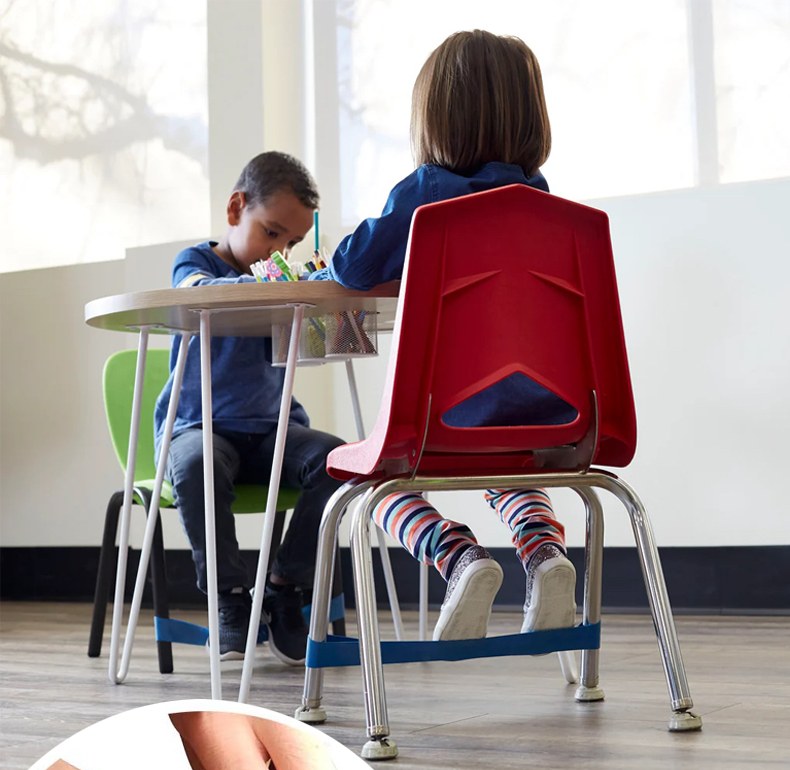
If you're not sure, check the label for "latex-free" or "TPE". Or stretch the band and smell it: latex has a distinctive rubbery-ammonia note, TPE is nearly odourless. If you're a brand owner, print the material on the insert card. It is the most useful line of care information you can give a customer.
Cleaner Compatibility Chart: TPE vs Latex vs Fabric
This is the table most care guides leave out. It's based on polymer chemistry and on the return cases we've traced back to cleaning. Remember it's guidance for repeated use: almost any cleaner is fine once.
| Cleaner | TPE (SEBS) | Natural latex | Fabric (woven) | Why |
|---|---|---|---|---|
| Mild dish soap + lukewarm water | ✓ Best | ✓ Best | ✓ Best | Removes sweat salts and skin oil without attacking the polymer |
| Quaternary ammonium wipes/sprays | ✓ Good | ✓ Good | ~ OK | Compatible, but leaves a film; wipe with water after contact time |
| Hydrogen peroxide (accelerated, ~0.5%) | ✓ Good | ~ Occasional | ~ Spot test | Mild oxidiser; low residue; may fade some dyes |
| 70% isopropyl / ethanol | ~ Occasional | ✗ Avoid routine | ~ Spot only | CDC: alcohols swell and harden rubber with repeated use |
| Bleach 1:100 (~500–600 ppm) | ~ Rinse after | ✗ Avoid | ✗ Avoid | Chlorine attacks latex double bonds; bleaches textile |
| Citrus / d-limonene / "natural degreaser" | ✗ Avoid | ✗ Avoid | ~ Spot test | Hydrocarbon solvent; swells rubber, attacks polystyrene blocks |
| Petroleum solvents, oil, baby oil, sunscreen | ✗ Avoid | ✗ Avoid | ~ Wash out | Swelling, tackiness, loss of tension |
| Dishwasher / tumble dryer | ✗ Avoid | ✗ Avoid | ✗ No dryer | 55–75°C plus alkaline detergent softens TPE and ages latex |
Two rows deserve a closer look.
Alcohol. The CDC's Guideline for Disinfection and Sterilization in Healthcare Facilities lists, among alcohol's documented drawbacks, that alcohols "tend to swell and harden rubber and certain plastic tubing after prolonged and repeated use." That's the hospital-equipment version of what happens to a latex band wiped with 70% IPA after every session: it dries, loses its surface, and starts showing the micro-cracks that lead to a snap. We cover the snap mechanics in why resistance bands snap and how long they last.
Citrus cleaners. This is the one that surprises gym owners, because d-limonene is sold as the gentle, plant-based option. Chemically it's a hydrocarbon solvent, the same reason it's used to dissolve polystyrene foam. An SEBS band holds its shape because its polystyrene end-blocks cluster into hard domains. A solvent that loosens those domains turns the band soft, tacky and weaker under load. If your TPE bands went sticky after a change of cleaning contractor, check the cleaner's SDS for limonene before blaming the band. (If they went sticky in storage instead, read why resistance bands get sticky, which covers a different mechanism.)
Everyday Cleaning: The 5-Minute Method for Any Band
- Mix: about 1 litre of lukewarm water (30–40°C, comfortable to the hand) with 2–3 drops of plain dish soap. No degreaser, citrus or "antibacterial" additives.
- Wipe or swish: run a soft cloth along the whole band, inside and outside of loops. For mini loops, a 30-second swish in the basin is enough.
- Rinse: in clean water. Soap left on the surface attracts dirt and makes the band slippery in the hand.
- Dry: pat with a towel, then lay flat or hang over a rail, out of direct sun and away from radiators, for a few hours. Never coil a wet band into a bag.
- Inspect: while it's clean, look for nicks, whitening or surface cracks, especially at the contact points with a handle, anchor or bar. Retire any band with visible damage.
How often? A home user who trains 3–4 times a week can do this every 2–4 weeks, or after any outdoor or sweaty session. Latex users can dust a little talc or cornstarch on the dry band to stop it sticking to itself. TPE doesn't need it.
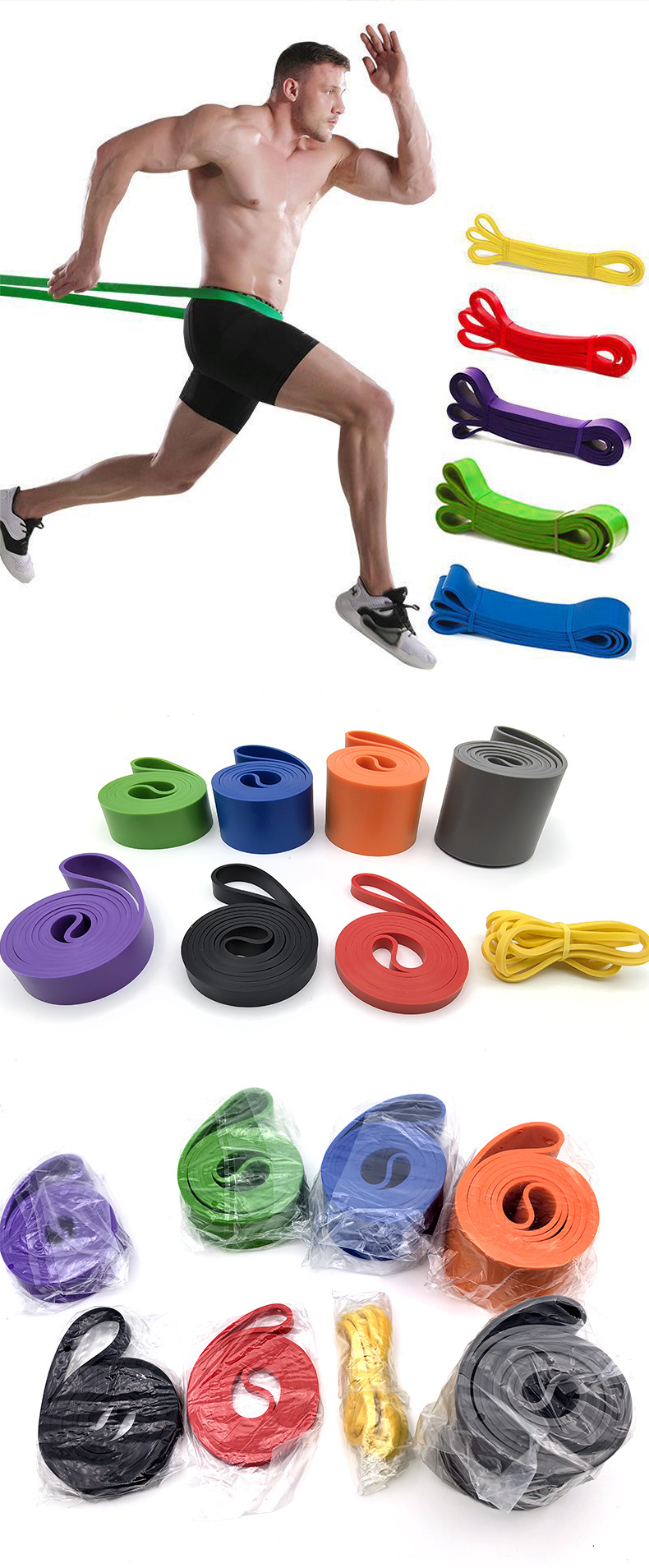
Buying bands for a gym, clinic or school? Our latex-free TPE pull-up bands and mini loop bands are made for quat and peroxide disinfection. We can print your care instructions on the insert card. Ask for the material spec sheet →
Disinfecting Shared Bands: Clinic, Gym and Classroom Protocols
Cleaning removes dirt. Disinfection kills what's left, and once more than one person uses the same band, you need both. In infection-control terms, a resistance band that touches only intact skin is a noncritical item under the Spaulding classification, the same category as a blood-pressure cuff. The CDC guideline calls for low-level disinfection of noncritical items with an EPA-registered disinfectant. Its low-level category specifies an exposure of at least 1 minute, but your product label's wet contact time is what counts. Some quat wipes need 2–3 minutes or more. A surface that dries in 30 seconds hasn't been disinfected.
| Setting | Recommended band | Between users | Deep clean | Replace when |
|---|---|---|---|---|
| PT / OT clinic, shared set | Latex-free TPE (allergy policy) | Quat or peroxide wipe, full contact time, water wipe | Weekly soap wash | Any nick, tack or visible soil that won't clean |
| PT clinic, home programme | Cut from roll / single loop | Single-patient item, goes home | Patient soap-washes | End of programme |
| Commercial gym / studio | TPE pull-up and loop bands | Member wipe with gym's quat spray | Staff soap wash every 2 weeks | Contact-point wear; 6–12 months typical |
| Classroom chair bands | TPE chair bands | Daily wipe with the school's approved disinfectant | Remove and wash each term | Stretch-set (band sags on chair) |
| Home user | Any | N/A | Soap wash every 2–4 weeks | Cracks, whitening, tears |
Clinics. Most PT and OT departments run two systems side by side. Bands prescribed for home exercise are cut from a roll or issued as single loops and go home with the patient, so they're never disinfected at all. A small shared set stays in the clinic gym and is wiped between patients. Make that shared set latex-free: you remove the allergy question entirely, and TPE copes better with daily quat wiping than latex does. Our physical therapy resistance band buying guide and occupational therapy clinical guide cover the purchasing side, and latex allergy and exercise equipment safety covers the allergy policy.
One detail infection-control teams know but gym staff don't: cotton and microfiber cloths absorb quaternary ammonium compounds, which lowers the concentration that actually reaches the surface. Pre-saturated wipes made for the disinfectant, or a fresh spray onto the band followed by the wait, are more reliable than a bucket of quat with a cotton rag in it.
Gyms. Shared bands are skin-contact equipment, so they belong in the same wipe-down routine as benches and handles. CDC guidance for athletic facilities on MRSA prevention focuses on cleaning surfaces that touch bare skin. Put the gym's spray bottle and paper towels next to the band rack, not at the front desk. Our commercial gym resistance band guide covers rack layout and replacement budgeting.
Schools. Classroom chair bands stay on chairs for months and are touched by bare legs. They can be wiped in place with whatever disinfectant the school already uses on desks, as long as it isn't citrus- or solvent-based. Take them off for a soap wash at the end of each term. More in our chair bands for ADHD classroom guide.
Fabric Bands: The Only Type That Goes in a Washing Machine
Woven hip and booty bands absorb sweat in a way solid bands can't, so they need washing more often, roughly every 5–10 sessions. The safe routine:
- Put them in a mesh laundry bag (the grip strips snag other clothes).
- Wash cold (30°C or below) on a gentle cycle with ordinary detergent. Skip bleach and fabric softener, because softener coats the silicone grip strips and makes them slide on your thighs.
- Air dry flat. Never tumble dry: the latex or rubber threads inside the knit lose their snap with heat, and the band comes out longer and weaker.
Not sure whether fabric or TPE fits your customer? See fabric booty bands vs latex.
What Cleaning Mistakes Look Like (and When to Retire a Band)
When a band comes back to us with a complaint, its surface usually tells us how it was cleaned:
| What you see | Likely cause | Action |
|---|---|---|
| TPE band soft, tacky, stretched longer | Citrus/solvent cleaner, oils, sunscreen | Retire |
| Latex band dry, chalky, fine surface cracks | Repeated alcohol or bleach; UV exposure | Retire |
| Slippery, filmy feel; white streaks when dry | Quat residue not rinsed off | Water wipe, keep using |
| Colour fading, no change in feel | Peroxide or sunlight on pigment | Usable; recheck the colour code |
| Fabric band longer and looser after washing | Tumble dryer or hot wash | Retire |
Fading matters more than it seems in shared settings. People pick bands by colour, and a faded red that looks orange gets the wrong patient on the wrong resistance. Keep a reference card from our resistance band color code chart by the rack.
Where you keep bands between uses matters as much as how you clean them. Store them dry, coiled loosely, out of sunlight and away from ozone sources like electric motors. Our resistance band shelf life and storage guide gives warehouse-level numbers.
For Brands and Distributors: Test Cleaner Compatibility Before You Print the Care Card
If you sell into clinics, gyms or schools, your buyer will ask "what can we clean these with?" Answer with data, not adjectives. Rubber has a standard method for exactly this: ASTM D471 (and its international counterpart ISO 1817), which measure the change in a material's properties after it's immersed in a liquid. A practical version for a band programme:
- Cut matched samples from the same production lot.
- Immerse one set in each cleaner your customers actually use, at use dilution, for 24 hours at room temperature, alongside a water-only control.
- Measure mass change, and band tension at 100% and 200% elongation, before and after.
- Repeat as a wipe-and-dry cycle (for example, 100 wipes) to mimic real use rather than soaking.
- Set your own pass line. We'd treat a tension change beyond about 10% against the water control as a reason to put that cleaner on the "avoid" list.
The result goes on your insert card and packaging as a short, specific line, like "Clean with mild soap or quaternary ammonium disinfectant. Do not use alcohol, bleach or citrus cleaners." That one sentence prevents more returns than any upgrade to the band itself. When you order OEM or private-label bands from us, we can run this comparison on your compound and print the result on the card.
Frequently Asked Questions
Can you clean resistance bands with alcohol wipes?
Occasionally, yes, but not as a routine. The CDC's disinfection guideline notes that alcohols tend to swell and harden rubber after prolonged and repeated use. On natural latex bands, repeated 70% isopropyl wiping speeds up drying and cracking. On TPE bands it is less damaging, but it can draw surface oil out and leave the band dull and grippy. For daily cleaning use mild soap and water; for disinfection use a quaternary ammonium or hydrogen peroxide product and wipe off the residue with water afterwards.
Can I use bleach on resistance bands?
Not on latex. Hypochlorite attacks the double bonds in natural rubber, which is why glove makers use chlorination deliberately to harden latex surfaces. A TPE band tolerates an occasional 1:100 household-bleach dilution (roughly 500-600 ppm) followed by a water rinse. If a band is contaminated with blood or body fluids, the realistic answer for a $2-5 band is to discard it rather than soak it in 1:10 bleach.
Can you put resistance bands in the washing machine or dishwasher?
Fabric (woven) hip bands can go in a washing machine on a cold, gentle cycle inside a mesh bag, then air dry. Never tumble dry them, because the heat damages the rubber threads woven inside. TPE and latex bands should not go in a washing machine or dishwasher: dishwasher cycles run at roughly 55-75°C with alkaline detergent, which softens TPE and accelerates latex ageing.
How do physical therapy clinics disinfect shared resistance bands?
Shared bands that touch only intact skin are noncritical items under the Spaulding classification, so clinics use low-level disinfection with an EPA-registered product, following the label's wet contact time. Most clinics avoid the problem entirely by issuing bands cut from a roll as single-patient items that go home with the patient, and by keeping a small latex-free shared set that is wiped down between patients.
How do you get the smell out of new resistance bands?
Wash once in warm (not hot) water with a drop of dish soap, rinse, and air dry in shade for 24-48 hours. New latex bands smell of ammonia and processing residues; new TPE bands may carry a faint mineral-oil or packaging odour. A strong, persistent chemical smell from a TPE band is a quality signal worth reporting to your supplier, not something to scrub away with solvents.
Why do my resistance bands feel sticky after cleaning?
Two common causes. Quaternary ammonium disinfectants leave a residue film if they are not wiped off with water after the contact time. Or the cleaner contained a solvent, such as citrus (d-limonene) or a degreaser, that softened the band's surface. If a TPE band stays tacky after a plain-water rinse, the surface has been swollen and the band should be retired.
Related Guides
- Why resistance bands get sticky: latex oxidation vs TPE oil bleed
- Why resistance bands snap, and how long they last
- TPE vs latex resistance bands
- Physical therapy resistance bands buying guide
- Latex-free resistance bands for clinics and schools
Latex-Free Bands That Survive the Wipe-Down
TPE pull-up bands, mini loops and classroom chair bands, compounded and extruded in-house. RoHS and phthalate-free. Custom colours, logo printing and care-instruction inserts. MOQ 1,000 sets, FOB China.