OEM vs ODM: Which Model Is Right for You?
Before you contact a single factory, you need to decide whether you want OEM or ODM. This decision shapes your entire project — budget, timeline, MOQ, and how unique your product will be.
| Factor | OEM | ODM |
|---|---|---|
| Definition | Factory makes YOUR design | You brand factory's existing design |
| Design Ownership | You own the design & mold | Factory owns the design |
| Exclusivity | Product is unique to you | Other brands can sell same product |
| MOQ | From 200 sets (logo printing) | From 1,000 sets (no logo) |
| Lead Time | 3-6 weeks (incl. sampling) | 2-3 weeks |
| Cost per Unit | Higher (development costs) | Lower (no development) |
| Best For | Established brands, unique products | Startups, Amazon sellers, testing market |
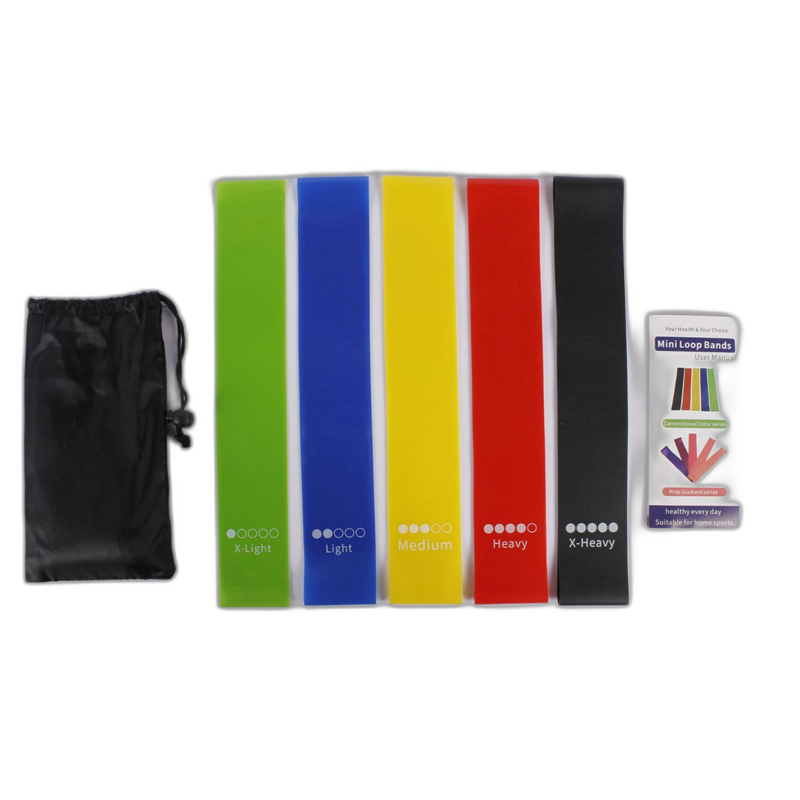
Our recommendation: If you are launching a new brand and testing the market, start with ODM. Order 500-1,000 pieces with your logo on an existing band design. Once you validate demand, switch to full OEM with custom dimensions, resistance levels, and exclusive colors.
6 Steps to Choose the Right Manufacturer
Not all resistance band factories are equal. Here is a proven process for finding and vetting the right partner:
Define Your Product Specs
Before contacting any factory, write down: material (TPE, latex, or fabric), dimensions (length x width x thickness), resistance levels needed, color requirements, logo placement, and packaging. The more specific you are, the more accurate your quotes will be.
Factory vs. Trading Company
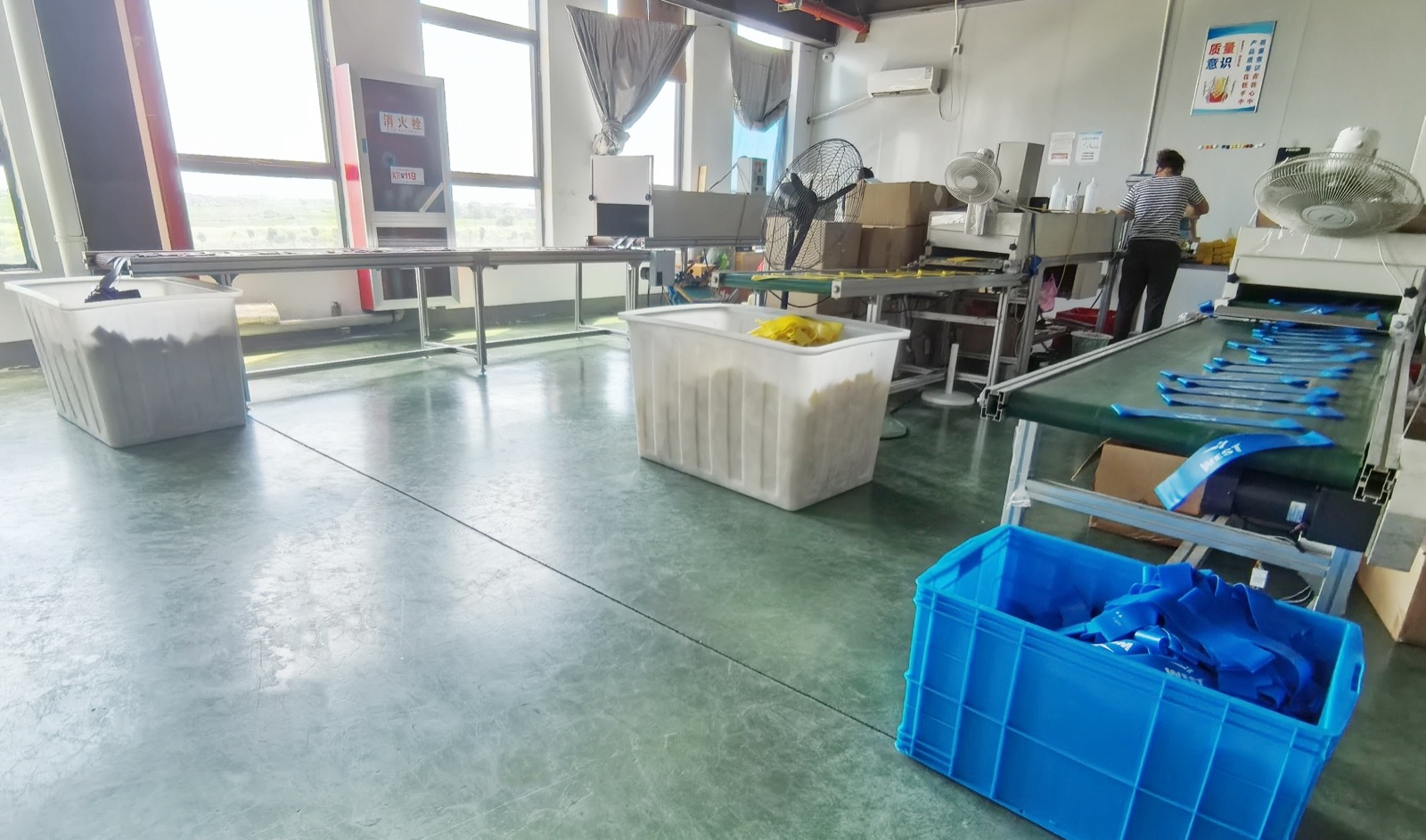
Always verify you are talking to an actual factory, not a trading company. Trading companies add 15-30% markup and have no quality control over production. Ask for factory photos, business licenses, and video calls showing the production floor. TAICLET welcomes factory visits at our Danyang facility — we have nothing to hide.
Check Material Source
Ask: "Where does your TPE come from?" Most factories buy TPE pellets from third parties and cannot guarantee consistency between batches. TAICLET produces its own TPE raw material in-house — we control the formulation at the molecular level, ensuring every batch has identical hardness, elasticity, and safety properties.
Request Samples & Test
Never place a bulk order without testing samples first. Stretch the band 100+ times and check for elasticity loss. Smell it — cheap TPE has a noticeable chemical odor. Measure dimensions and compare to spec. Check color against your Pantone reference. Test the logo print by rubbing it 50 times with a wet finger.
Negotiate Terms Clearly
Get everything in writing: unit price, MOQ, payment terms (typically 30% deposit, 70% before shipping), lead time, defect rate tolerance (industry standard: under 2%), and who pays for shipping. Clarify what happens if the shipment has quality issues — a good factory will have a clear quality guarantee policy.
Start Small, Scale Up
Place a trial order (MOQ or slightly above) before committing to large volumes. Evaluate the entire experience: communication speed, production timeline accuracy, packaging quality, and how they handle issues. A factory that is easy to work with on 1,000 pieces will be your best partner when you scale to 50,000.
Logo Printing Methods Compared
Your logo is your brand identity on the product. Choosing the right printing method matters for durability, aesthetics, and cost. Here is how the three main options compare:
Silk Screen
- Colors: 1-3 (spot colors)
- Durability: Excellent
- Cost: Lowest
- Best for: Simple logos, text
- MOQ: 200 sets
Heat Transfer
- Colors: Unlimited (full CMYK)
- Durability: Very good
- Cost: Medium
- Best for: Complex logos, photos
- MOQ: 200 sets
Laser Engraving
- Colors: Single (etched)
- Durability: Permanent
- Cost: Highest
- Best for: Premium branding
- MOQ: 200 sets
Common OEM Pitfalls (And How to Avoid Them)
After working with hundreds of brands over 7+ years, here are the most common mistakes we see first-time buyers make:
✗ Mistake: Choosing solely on price
The cheapest quote usually means the cheapest material. Low-grade TPE cracks faster, smells bad, and loses elasticity after a few hundred stretches. Your Amazon reviews will tank.
Fix: Compare samples side by side, not just quotes. Test durability, not just price.
✗ Mistake: Skipping the sample step
Some buyers go straight from quote to bulk order to save time. Then they receive 5,000 bands with the wrong color, wrong thickness, or a logo that peels off after three uses.
Fix: Always get pre-production samples. Budget 1-2 weeks for this step.
✗ Mistake: No written quality standard
"Good quality" means different things to different people. Without a written spec (dimensions, color code, resistance range in lbs, acceptable defect rate), you have no basis for a dispute.
Fix: Create a product spec sheet with measurable criteria. TAICLET provides a standard spec template for every OEM client.
✗ Mistake: Ignoring packaging until the last minute
Custom packaging (color boxes, insert cards, carrying bags) has its own MOQ and lead time. Ordering it as an afterthought delays your shipment by 1-2 weeks.
Fix: Design packaging in parallel with band production. Send artwork files (AI/PDF, 300dpi) with your initial order.
Why Brands Choose TAICLET for Custom Bands
We are not the cheapest factory. We are the factory that makes your brand look good and keeps your customers coming back:
- In-house TPE production — Consistent quality, batch after batch, because we control the raw material.
- 30M+ bands/year capacity — We can handle your growth from 1,000 to 100,000 pieces without switching suppliers.
- Full customization — Pantone colors, dual-tone designs, gradient colors, all three printing methods, and retail-ready packaging.
- 100% latex-free — Every band we produce is TPE. RoHS certified. No cross-contamination risk.
- Spec template provided — We give every new client a standardized product spec sheet to avoid miscommunication.
About the Author
This guide was written by the TAICLET sales and production team, drawing on 7+ years of experience manufacturing custom resistance bands for brands across 30+ countries. We have seen what works and what does not — and we want to help you get it right the first time.Learn more about TAICLET.